

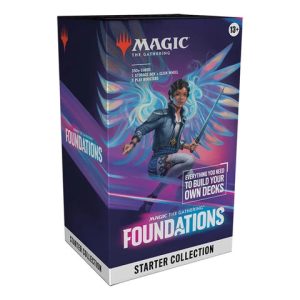
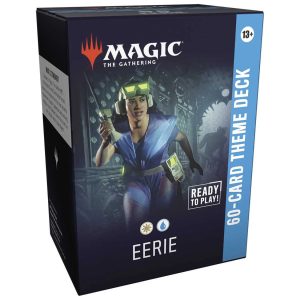
A starter deck is the cheapest way into Magic and the only product designed to teach the game while you play it. We stock four: a 60-card theme deck at $18.49, a two-player starter kit at $19.49, the Foundations Beginner Box at $24.49 and the Foundations Starter Collection at $55.49.
This page explains what is inside each one, which suits a single player and which needs a second person, and how to get from opening the box to playing a real game without buying anything else.
| Sealed listings | 4 |
|---|---|
| Cheapest | $18.49 (Strixhaven Eerie Theme Deck) |
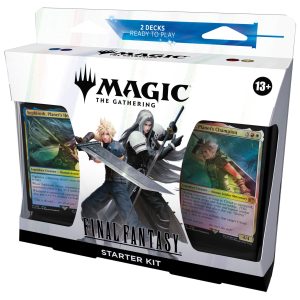
| Two-player option | $19.49 (Final Fantasy Starter Kit) |
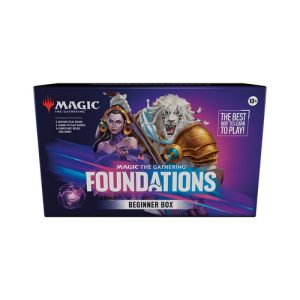
| Learn-to-play box | $24.49 (Foundations Beginner Box) |
| Biggest instant collection | $55.49 (Foundations Starter Collection) |
| Cards in a theme deck | 60, ready to play |
| Beginner Box packs | 10 themed Jumpstart packs of 20 cards |
| Starter Collection cards | 387, plus 3 play boosters |
| Dispatch cut-off | 5pm, same working day |
| Free delivery | Orders over $1,000 |
On this page
What comes inside MTG starter decks
Every product here is a finished deck or a fixed box of cards, not a random pile. A theme deck is 60 cards built around one idea, with lands included and a strategy insert explaining the plan. A starter kit is two of those decks plus the accessories two people need. A beginner box is a set of pre-built half-decks you shuffle together. Nothing here needs a shopping list.
That is the difference between starter decks and booster packs. A pack is randomised and a deck is not, so a beginner who buys packs first usually ends up with 200 unsorted cards and no deck. Buy the deck, learn the game, then buy packs when you know what you want to open.
All four listings are sealed in the publisher’s original packaging. We photograph each one on arrival so the box in the photo is the box you receive, and an unopened starter deck can be returned within 48 hours of purchase.

The four starter decks we stock, and who each suits
Four listings, four different jobs. The table below is the short version; the sections after it take each one apart.
| Product | Price | Players | You get |
|---|---|---|---|
| Strixhaven Eerie Theme Deck | $18.49 | 1 (needs an opponent) | 60-card enchantment deck, tokens, deck box |
| Final Fantasy Starter Kit | $19.49 | 2 | Two 60-card decks, two deck boxes, play guide |
| Foundations Beginner Box | $24.49 | 2 | 10 Jumpstart packs, two playmats, two spindowns |
| Foundations Starter Collection | $55.49 | 1 or 2 | 387 cards, 3 play boosters, lands, deck-building guide |
If two people want to learn together, the Final Fantasy Starter Kit is the cleanest purchase: two complete decks, two deck boxes, a play guide and reference cards, all for $19.49. If you are buying for one person who already has someone to play against, the Eerie theme deck at $18.49 does the same job for one seat.
The Beginner Box and the Starter Collection sit above both. The Beginner Box is the better teaching product, because the Jumpstart packs are pre-built to be shuffled in pairs and played immediately. The Starter Collection is the better long-term purchase, because 387 cards is a collection rather than a deck.
The rest of this page covers the details that decide whether a purchase is worth making.
Starter deck vs Commander precon vs bundle
Three products compete for the same first purchase, and they are not interchangeable. A starter deck teaches the game with a 60-card deck and one opponent. A Commander precon is a 100-card multiplayer deck that assumes you already know the rules. A bundle is nine packs, lands and a box with no deck in it at all.
| Starter deck | Commander precon | Bundle | |
|---|---|---|---|
| Deck included | Yes, 60 cards | Yes, 100 cards | No |
| Players | Two | Three to four | Whatever you build |
| Teaches the rules | Yes | No, assumes them | No |
| Price here | $18.49 to $55.49 | $29.49 and up | $55.49 and up |
| Buy it if | You are new | You know the rules | You want packs |
The most common mistake is buying a bundle for a beginner because it looks like more product. Nine packs and a box do not make a deck, and the first game will still need lands, a plan and an opponent with a deck. A starter deck plus a friend is the cheaper route to actually playing.
Everything below applies to sealed product bought from us directly, not to marketplace stock.
The best beginner MTG decks for a first game
The best beginner MTG decks are the ones with one clear plan and no cards that need a judge. The Strixhaven Eerie theme deck qualifies: it rewards you for playing enchantments and unlocking Rooms, which is a single idea repeated across 60 cards. You will understand what the deck wants by turn three.
The Final Fantasy Starter Kit is the strongest two-player option because both decks are built to be played against each other. Cloud and Sephiroth are balanced for exactly this, and the play guide walks through a first game rather than dumping the comprehensive rules on you.
What makes a deck bad for beginners is not complexity in the abstract, it is decision count. A deck that asks you to choose between three modes on every card will slow the game down and teach the wrong lesson. All four products here keep the choices narrow, which is why they are the four we stock.

Read the delivery and returns sections before you order if timing matters to you.
How to play your first game with a starter deck
Open the box, take out both decks if there are two, and shuffle each one thoroughly. Each player draws seven cards, then decides whether to keep that hand. If you are learning, keep the first hand and play it out; mulligan decisions are a skill you can learn later.
Each player starts on 20 life. On your turn you untap, draw one card, play a land and then cast spells with the mana those lands produce. Creatures cannot attack the turn they arrive unless they have haste, and a creature that is blocked and killed still deals no damage to the player.
The reference cards in the Final Fantasy kit and the Beginner Box cover turn order and combat, which are the two things new players get wrong. Read those two cards before the first game rather than during it, and keep the strategy insert next to you: it tells you what the deck is trying to do, which is more useful than knowing every rule.
One practical note: play the first game with the decks as they come. Do not add cards from a pack, do not swap lands. A starter deck is balanced against the deck it shipped with, and changing it before you understand it makes the first game harder, not easier.
The same terms apply to every sealed product sold in this part of the shop.
Magic starter kit contents: what the Fantasy kit gives two players
The Final Fantasy Starter Kit is the clearest example of what a magic starter kit is for: two people, one box, nothing else needed. Inside are two ready-to-play 60-card decks themed around Cloud and Sephiroth, two deck boxes, four double-sided token cards, two reference cards covering turn order and combat, and a play guide booklet.
Each deck contains a traditional foil mythic rare legendary creature, so the kit is also a small collection rather than purely a teaching tool. The kit includes Arena codes for both decks in supported regions, which means two people can keep playing online after the cardboard game ends.
Compared with buying two theme decks separately, the kit is cheaper and better balanced, because the two decks were designed as a pair. At $19.49 it is the cheapest route to a real two-player game that we sell, and it is the purchase we recommend to anyone buying a first Magic product for two people.
Upgrading a starter deck without buying a new one
A starter deck is a starting point, and the cheapest upgrade is not a new deck. Start by improving consistency: if the deck has 61 or 62 cards, cut down to 60 so you draw your best cards more often. Then look at the mana base and replace lands that always enter tapped with lands that do not.
The second upgrade is depth. Pick the two or three cards the deck relies on and add one or two more copies of the same effect from packs or singles. A theme deck usually runs two copies of its key card; going to four makes the plan happen more often without changing what the deck does.
What we would not do is bolt a second theme onto a starter deck. Adding a combo to an enchantment deck makes both halves worse. If you want a different plan, buy a different precon; if you want the same plan more reliably, upgrade the existing one.
Starter decks for two players, and for families
Two-player starter decks are the right purchase for a household, because Magic needs an opponent and a single deck cannot be played alone. The Beginner Box is built for exactly this: two playmats, two spindown life counters, two how-to-play guides and ten themed Jumpstart packs of 20 cards each, which shuffle together into two 40-card decks.
For a family with children, the Beginner Box is the better product than a Commander precon. The games are shorter, the card pool is smaller and the two reference guides assume nothing. The publisher’s age guidance is printed on the box, so check that before ordering if the deck is for a younger player.
For two adults who already play other card games, the Final Fantasy kit is the faster route: 60-card decks, real constructed Magic and a guide that gets out of the way. Both products cost less than a single Commander precon, which is the point.
Sealed condition, delivery and returns on starter decks
Starter decks are small, light and easy to ship, but they are also easy to crush, so every one goes out in a padded mailer or a small box with card stiffening. Orders placed before 5pm leave the same working day with FedEx, DHL, USPS or a local courier and every parcel is tracked. Delivery is free over $1,000.
Sealed means the publisher’s wrap is unbroken and the deck box has not been opened. If a starter deck arrives with a torn seal, photograph it before you open anything and contact us within 48 hours of delivery; we will replace it.
An unopened starter deck can be returned within 48 hours of purchase. Once the wrap is off, the cards cannot be resold as new, so opened decks are not returnable. The returns page sets out the full condition rules.
Why we only stock four starter decks
Most shops list dozens of beginner products and most of them are obsolete. A starter deck from a set that rotated out two years ago still teaches the game, but the cards inside it are not legal anywhere the new player will end up playing, and the price is usually worse than a current deck.
We stock four because four covers every case: one deck for a single player, one kit for two players, one box for a family learning together, and one collection for someone who wants a card pool rather than a deck. Everything we list is current, sealed and priced against what it actually costs to buy elsewhere.
If none of the four fits, tell us who the deck is for and we will point you at the right product, even if it is not one we sell. A beginner who buys the wrong box does not come back; that is a worse outcome than a sale we did not make.
What to buy after your first starter deck
The next purchase depends on who you play with. If you have one regular opponent, a second 60-card deck is the cheapest way to keep playing: two decks that were designed to face each other produce better games than one deck and a pile of cards. If you have a group, a Commander precon is the natural step and costs $29.49 to $55.49.
If you want to start collecting rather than playing, a bundle is the sensible next buy: nine play boosters, a land pack and a storage box for the cards you already own. Packs make more sense once you have a deck to put the cards into, because a beginner opening packs without a deck ends up with a stack and no plan.
What we would not recommend is buying a booster box as a second purchase. Thirty packs is a lot of money for someone who has played two games, and the cards inside will not improve a starter deck enough to justify the price. Buy the deck, play ten games, then decide.
Frequently asked questions
What is the difference between a starter deck and a booster pack?
A starter deck is a fixed 60-card deck you can play immediately. A booster pack is a randomised set of cards with no deck in it.
Can one person play with a starter deck?
You need an opponent, but one deck is enough for one player. The Final Fantasy Starter Kit and the Foundations Beginner Box each cover two players.
How many cards are in a starter deck?
60 in the theme deck and in each deck of the Final Fantasy kit. The Beginner Box uses ten 20-card Jumpstart packs, and the Starter Collection contains 387 cards.
Is a starter deck legal in tournaments?
Theme decks and starter kits are built for learning and casual play. The cards are real Magic cards, but a 60-card deck needs to meet a format’s rules before it can be played in an event.
Do I need to buy lands separately?
No. Every starter deck here includes its lands, and the Starter Collection adds 90 basic lands on top of its 387 cards.
Can I return a starter deck?
An unopened starter deck can be returned within 48 hours of purchase. Opened decks cannot be returned because the cards cannot be resold as new.
Sources and further reading
Where a fact on this page comes from somewhere else, this is the source.
- Magic: The Gathering product page – official contents for Foundations and licensed starter products.
- Scryfall card search – look up any card in a starter deck.
- Wizards Play Network product listings – publisher contents sheets for theme decks and kits.
Where to go next
Once the first game is done, these are the natural next purchases.
MTG Starter Decks - Beginner Decks and Learn-to-Play Kits
MTG Starter Decks - Beginner Decks and Learn-to-Play Kits
MTG Starter Decks - Beginner Decks and Learn-to-Play Kits
MTG Starter Decks - Beginner Decks and Learn-to-Play Kits